Why Jumping Might Be One of the Best Things You Can Do for Your Bones
When most people think about bone health, they think about calcium, vitamin D, or maybe walking.
But what if one of the most powerful things for your bones was something much simpler… impact?
Especially for women.
Osteoporosis affects around 1 in 3 women over the age of 50. After menopause, women can lose around 2–5% of their bone density per year for up to a decade due to declining oestrogen levels.
The good news?
Bone is living tissue - meaning it adapts to the stresses we place on it.
And bones LOVE load and impact.
Why Walking Often Isn’t Enough
Walking is fantastic for cardiovascular health, mood, mobility, and general wellbeing. Keep walking. But when it comes to improving bone density, especially around areas like the hips (femoral neck), walking alone often doesn’t provide enough stimulus for bone-building cells.
Bones respond best to:
Resistance training
Impact loading
Fast force production
That’s where jumping can be incredibly helpful.
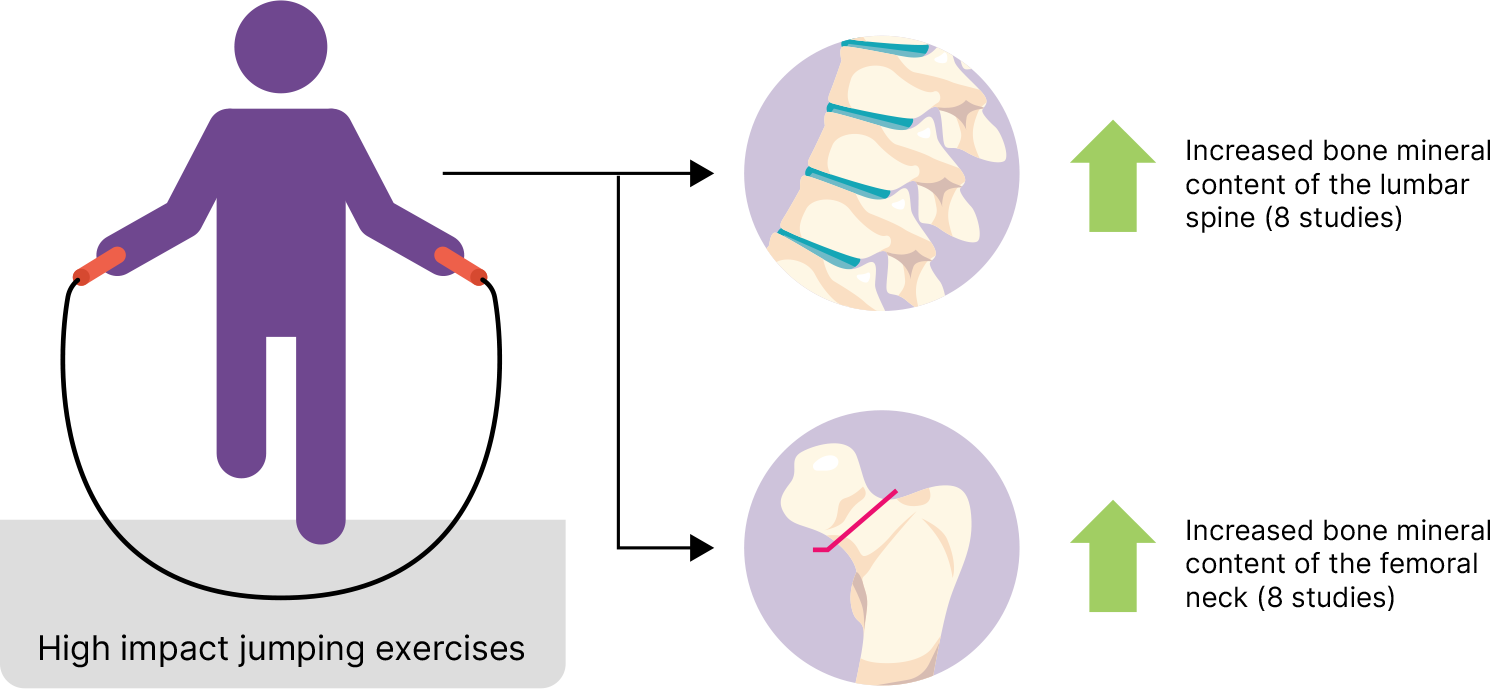
Research has shown that impact-based exercise can help improve or maintain bone density, particularly in the hips - one of the most important areas to protect as we age.
“But I Can’t Just Start Jumping…”
Good. You shouldn’t go from zero to box jumps overnight.
Bone health training should be progressive, safe, and appropriate to your current strength, balance, and confidence.
The goal is not to jump as high as possible. The goal is to safely introduce impact.
Simple Jumping Progressions
1. Supported Side-to-Side Jumps
Hold onto a bench, bar, kitchen counter, or sturdy rail and gently shift/jump side to side while taking some body weight through the arms.
Great for:
Beginners
Hip or knee stiffness
Reduced confidence
Osteopenia
2. Squat + Heel Raise
Start with a mini squat, then rise onto your toes quickly at the top.
This introduces force through the legs without leaving the ground.
3. Mini Squat Jumps
Small controlled jumps - not maximum effort.
Focus on:
Soft landings
Quiet feet
Knees tracking well
Think “land like a ninja.”
4. Jump Down, Jump Up
Using a low step, outdoor stairs, or a small platform:
Step or lightly jump down
Outdoor steps can work really well here if they’re stable and non-slippery.
5. Box Jump Progressions
For stronger and more confident individuals:
Small box and jump up onto the box.
Soft landing
Slight squat on landing
Remember: quality over height.
How Many Jumps?
You don’t need hundreds.
Many programs use around:
10–25 jumps per session
2–4 times per week
Consistency matters more than intensity.
Important Safety Notes
If you have:
Severe osteoporosis
A history of fractures
Significant balance issues
Acute pain
Medical conditions affecting bone health
Please seek medical advice or guidance from a qualified health professional before starting impact exercise.
Not every exercise is suitable for every person.
What About Pelvic Floor Issues or Leakage?
Some people may notice leakage, heaviness, or prolapse symptoms with jumping or impact exercise. This doesn’t automatically mean you should avoid impact forever - often it means the pelvic floor may need strengthening, coordination, and a more gradual progression.
Starting with lower-level impact options and building strength over time can help. If symptoms are occurring, consider seeking guidance from a pelvic health physiotherapist or qualified health professional.
Remember: leakage during exercise may be common, but it’s not something you simply have to “put up with
The Bigger Picture
Bones follow a simple rule: Use it or lose it.
Even in your 60s, 70s, and beyond, the body can still adapt when given the right stimulus.
Strength training and impact exercise are some of the most evidence-backed ways to help support healthy bones and reduce the risk of future fractures.
Your future self will thank you for starting now.
If you’d like guidance on safe strength or bone health exercises, our team at Strong Life Osteopathy can help tailor a program to your current level and goals.
